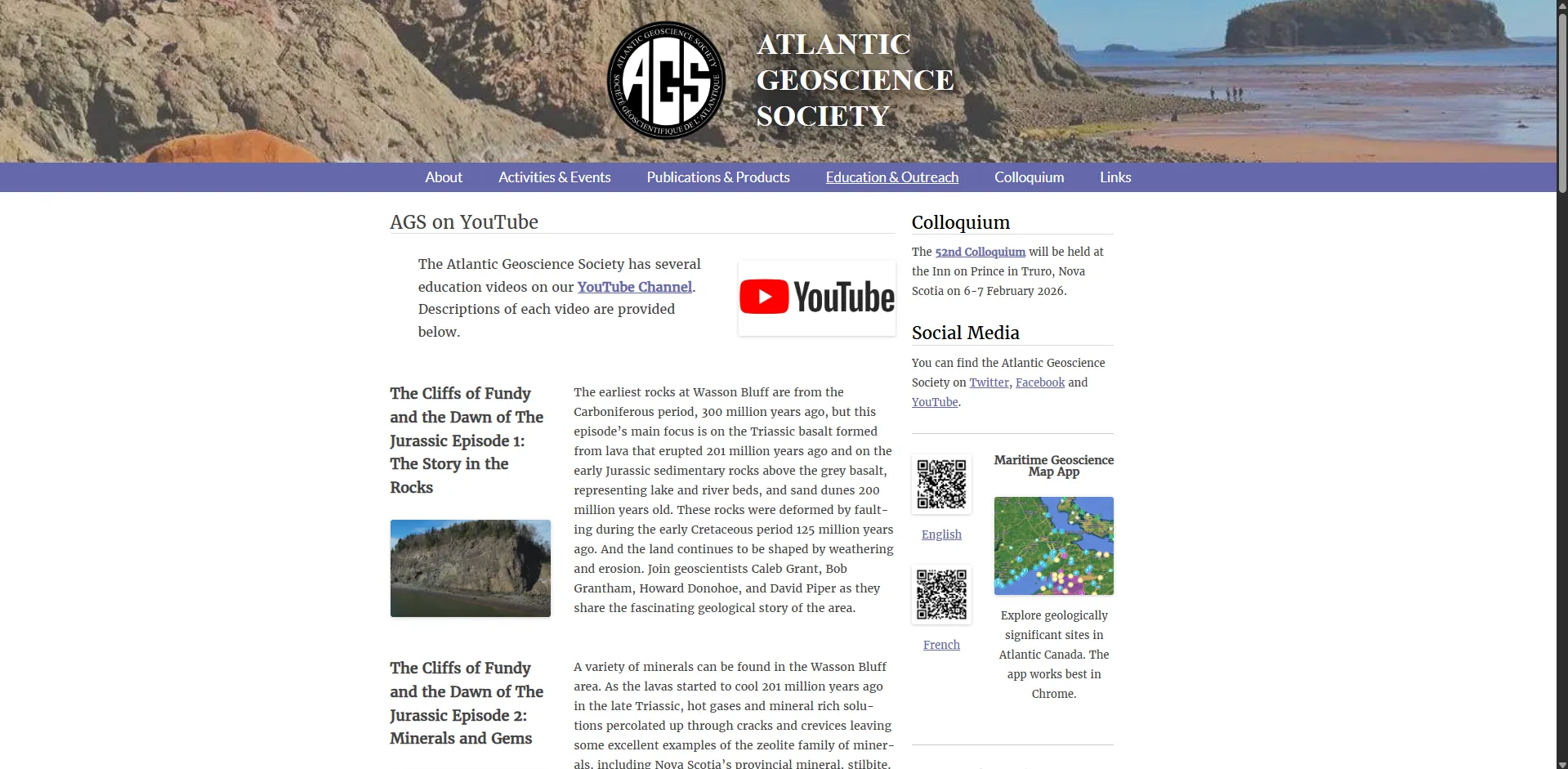

The Cliffs of Fundy
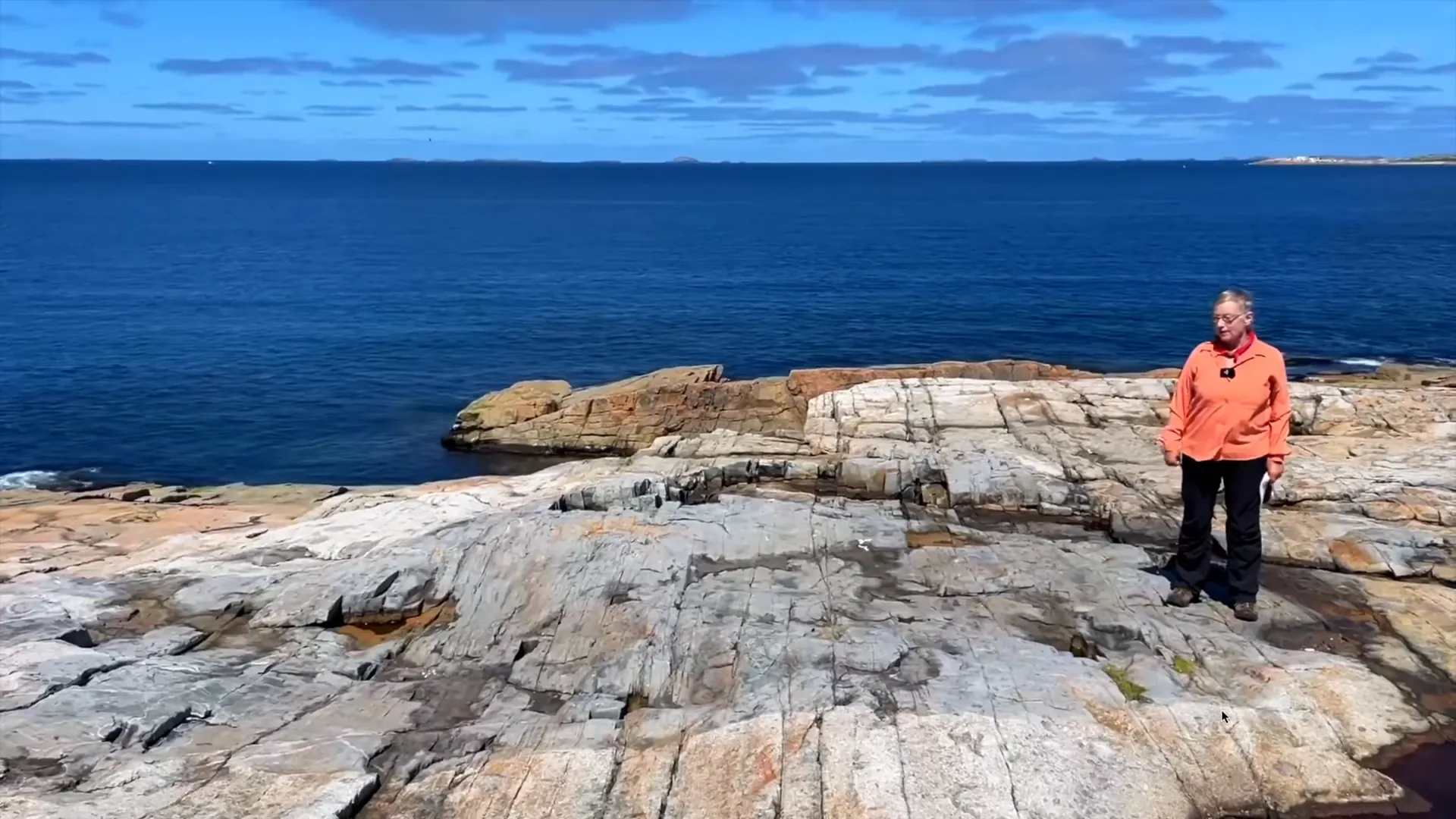
The Atlantic Geoscience Society (AGS) has long been at the forefront of geoscience education in Canada. One of their most impactful digital initiatives is the multi-part video series, "The Cliffs of Fundy and the Dawn of the Jurassic," which brings to life the 300-million-year history of the Wasson Bluff area and the Minas Basin.
A Journey Through Time The series is divided into four thematic episodes, each featuring world-class geoscientists and researchers who guide viewers through the rugged beauty of Nova Scotia's coastline:
- Episode 1: The Story in the Rocks: Focuses on the dramatic transition from Carboniferous rocks to the massive Triassic basalt flows erupted 201 million years ago, capped by early Jurassic river and lake beds.
- Episode 2: Minerals and Gems: Explores the "hot gas" mineral solutions that formed the world-renowned zeolite minerals, including Nova Scotia’s provincial mineral, Stilbite.
- Episode 3: Dinosaurs and More: Documents the fossil evidence of the survivors of the Triassic mass extinction, including early prosauropod dinosaurs, fish, and the ancestors of mammals (Trithelodontids).
- Episode 4: Oral Tradition and History: Highlights the deep connection between the land and the Mi'kmaw people, sharing how traditional knowledge and legends align with modern scientific discovery.
Broadening the Outreach Beyond the "Cliffs of Fundy," the AGS YouTube initiative features a diverse catalog of educational content, including "Rockhound of York Redoubt"—a lighthearted tour of Halifax's geology led by "Dusty" the Golden Retriever—and "Time Travel at Arisaig," a virtual walk across 460 million years of volcanic and sea floor history.
Impact and Legacy By blending high-level scientific expertise with engaging storytelling and stunning cinematography, the AGS has created a permanent digital resource for students, tourists, and citizen scientists. These videos serve as a vital tool for promoting geological heritage and environmental awareness across the Atlantic provinces.
The project was supported by the Canadian Geological Foundation (CGF) as part of its ongoing mission to fund excellence in geoscience education and public outreach.